

Formulas are for Mules, Part I
An introductory prevarication
Sometimes, the truth of a matter isn’t so obvious as to just point at it and see it. Like a doctor whose white coat elicits our trust and deference, or like a navy sailor whose full dress uniform elicits our honor and gratitude for his service, your math teachers brandish their formulas, and we are supposed to just reel in awestruck wonder: oh, Mrs. So-and-So, how brilliant you are to have remembered such a pristine little package of ancient hieroglyphic gibberish.

A circumlocution of encouragement
I shouldn’t have to say what follows, but you need to hear it. You are a human being. You are a person, born with the divine spark of language. How do I know? Easy. If you’re reading this right now, then you’re reading this right now. And the fact that you’re reading this right now means that you are not a mule.
Don’t get me wrong. Mules seem great—unless, of course, the breeding of mules is suddenly politically incorrect, and I’m already gauche for not having been informed, in which case forget mules and forget those lowdown scoundrels who breed them!
But I don’t think we’re there yet, so let’s discuss the purpose of breeding mules and praise some of the qualities thereof: A mule is more intelligent than its donkey father. A mule is less prissy, high maintenance, and moody than its horse mother. A mule’s skin is tougher than that of its horse mother. A mule is a generally hardier and less needy workhorse work animal. A mule is a mule.
You are not a mule. You are a person.
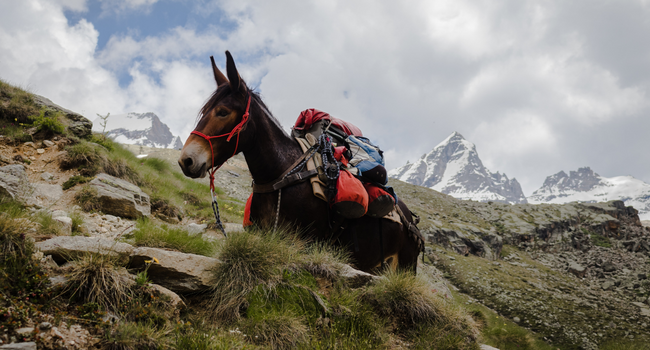
A little blunt force trauma from some cold hard truth
Now that we’ve gotten the good news out of the way, here’s the disconcerting fact that remains: You’ve been treated like a mule for most of your years in Math class. You’ve been fed the formulas that get the job done, yet you’ve been given no high-level understanding of the farm you’re working on. You’ve had to trek through muddy step-by-step processes for Mrs. So-and-so so that she can be called a good mule breeder teacher.
Formulas are for mules.
In Part II, we’ll get down to business.
The F-word comes up in Part II, but not the one you’re thinking. Click here to read now. Please share this post with someone else who may find it useful!