
Punctuation Rules Are Black and White
Why do students leave high school not knowing they can use semicolons to separate two related sentences? Why do most students I meet for the first time lack the ability to use colons outside of telling time? Why do students associate commas with “breaths” and “pauses” instead of with specific rules?
As a teacher, I understand why we often don’t teach students punctuation rules: we lack the time, we don’t want to squash students’ creativity, and we often don’t have the confidence ourselves to explain these rules.
Instead of explaining simple punctuation rules in clear, age-appropriate ways, we, with the best of intentions, give students our blessing to play in the sandbox of language. And our students are stuck associating punctuation with cat turds.

I get the sandbox idea. It’s a fun place for me: I no longer find cat turds in mine. But I, like most English teachers, am a complete dork when it comes to language. Of course I get excited when I find a sentence in a book I’m devouring where the author uses punctuation in an interesting way. Naturally, I file that usage away in my brain as something that might be fun to try in my own writing. How many students really do the same?
I already know the rules, so it’s fun for me to see how I can break them without sacrificing clarity in my writing. Like Picasso, I explore abstract styles because I’ve already mastered realism. Yes, I am basically the Picasso of test prep.
(If you ever catch an “interesting” use of punctuation in one of these posts, it was definitely an intentional subversion of conventions and NOT a typo.)
But I did have to master the conventions before I could appreciate breaking the rules. I’m not trying to create outsider art here.
Mastering conventions is also how students can learn to quickly move through the grammar portion of the ACT and SAT. If you know your black-and-white rules, you will know which answer choice is correct as well as why it has to be correct. If you don’t know those rules, you’re left to sound out answers in your head and rely on a gut feeling. The first method inspires confidence in students. The second allows them to be bogged down by doubt.
Punctuation rules are black and white. If you’re looking to improve your ACT English or SAT Writing score, you probably need to spend more time with these rules. I mean, even questions that don’t involve punctuation in the answer choices can be punctuation questions+.
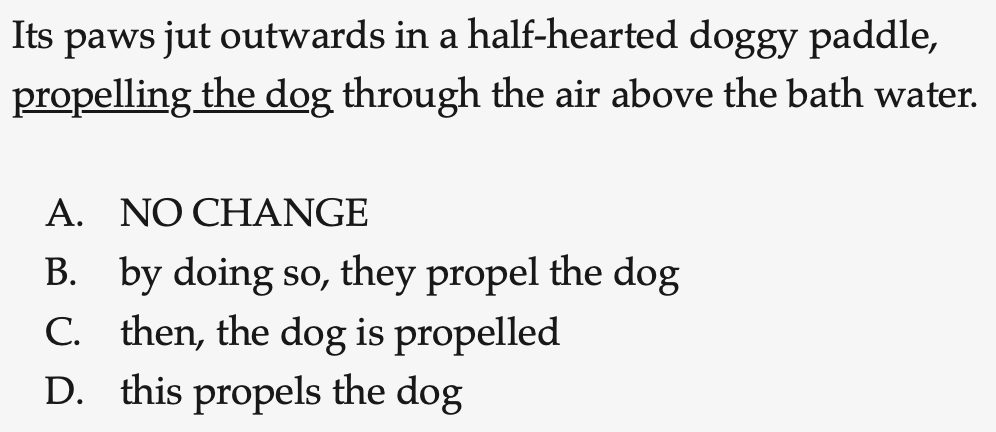
KYBO Club member students can check out the Punctuation workbook to take a look at all the rules they need to know for test day as well as example questions related to each rule.
Feeling a little left out of the extra content?
Get access to our extensive library of information, practice tests, and video content by becoming a member! Don’t forget to share this post with others who may find it useful!